Smart Navigation Aid for Visually Impaired: 3rd Eye

Problem Statement

Traditional white canes used by visually impaired individuals provide limited feedback and require constant physical effort. The team wanted to reimagine this assistive tool and create a smarter, more intuitive navigation aid using embedded electronics to detect obstacles and guide users through haptic feedback.   

Contributors

Paarth Bansal, Deptanshu Bhowmick, Dhruv Jain
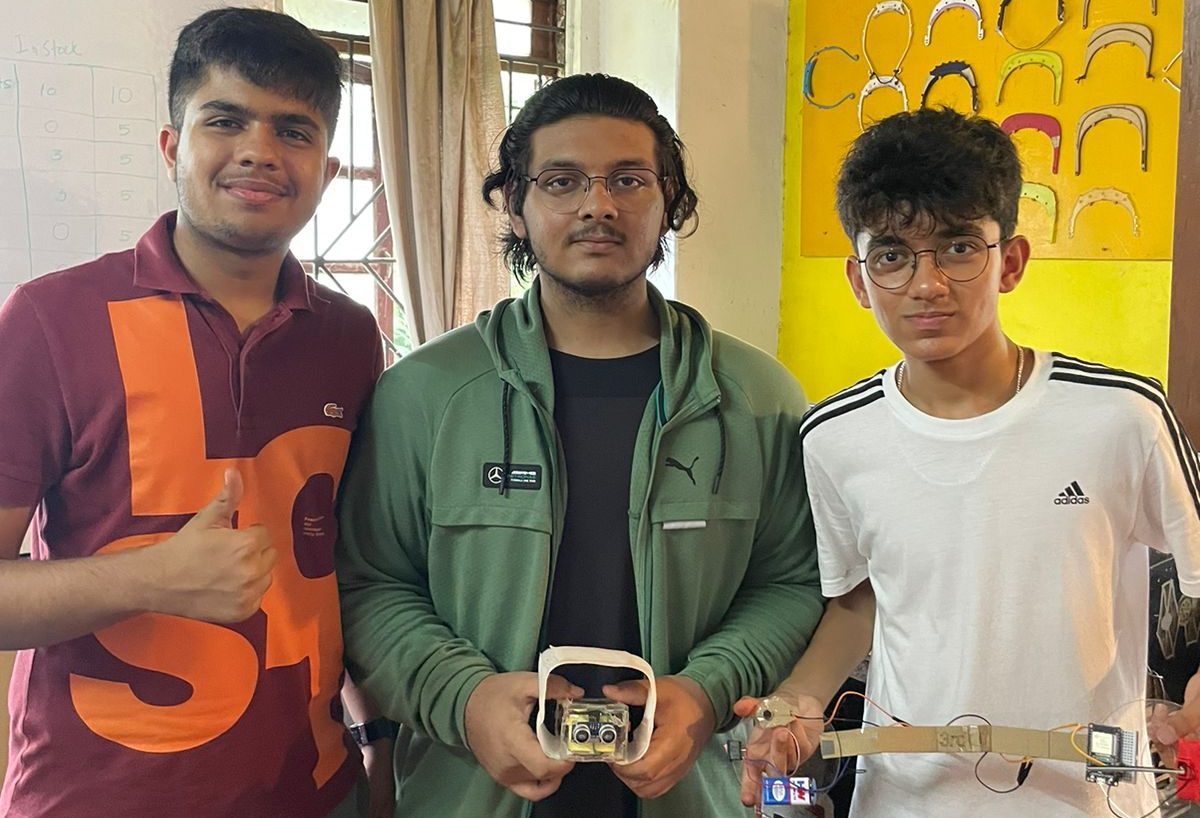
Feature image

About Smart Navigation Aid for Visually Impaired: 3rd Eye

Solution

  The final device includes two modules: Ankle/Shin Modules – Mounted securely to detect ground-level or mid-body obstacles. Head Module – Worn around the ears to detect higher obstacles. Each module uses ultrasonic sensors for object detection and haptic motors for feedback. The system intelligently adjusts vibration intensity based on object distance. The result is a hands-free, non-intrusive aid that enhances safety and confidence for visually impaired individuals. 

Additional Info

Idea: Initially, the team explored modifying an existing white cane by integrating sensors and electronics but realized it introduced redundancies and design limitations. Guided by their mentors, they pivoted towards improving an earlier project, BAT-NAV, which had ankle-mounted modules. They enhanced it by: Repositioning the modules higher up to the ankle/shin area for better stability and sensing. Adding a head module to detect upper-level obstacles, enhancing overall situational awareness. Objectives: Detect nearby obstacles using ultrasonic sensors. Compare distance readings to a preset threshold (e.g., 150 cm). Trigger vibration motors to inform users of obstacle proximity. Use varying vibration patterns to convey distance and direction of obstacles. Improve mobility safety and comfort for visually impaired users.

Image Gallery

Built on Unicorn Platform
